
Sotto una stella storta
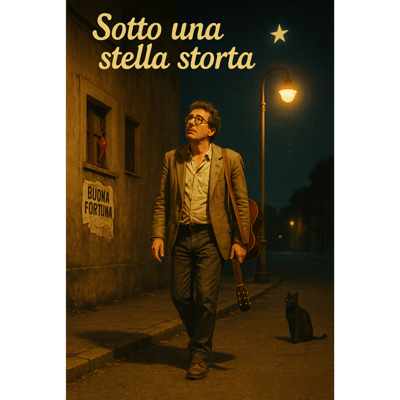
1970s Italian cabaret-pop song with lively acoustic instrumentation and humorous theatrical vocals. The arrangement should feature acoustic guitar, upright bass, light drums with brushes, and playful brass or clarinet interjections. The rhythm has a swinging, slightly funky groove that feels like street jazz meeting folk storytelling. The vocal performance should sound expressive, talkative, and slightly ironic — halfway between singing and acting, with sudden changes of tone and tempo to emphasize the comedic lyrics. The singer delivers the lines with warmth, wit, and a touch of melancholy, as if performing in a small smoky café-theater. Include occasional background voices or spoken comments, as if the performer is improvising or chatting with the audience. Keep the mood joyful, clever, and a bit chaotic — a mix of humor and realism, showing affection for ordinary people and their superstitions. The song should feel authentically Italian from the 1970s: human, spontaneous

Sotto una stella storta
1970s Italian cabaret-pop song with lively acoustic instrumentation and humorous theatrical vocals. The arrangement should feature acoustic guitar, upright bass, light drums with brushes, and playful brass or clarinet interjections. The rhythm has a swinging, slightly funky groove that feels like street jazz meeting folk storytelling. The vocal performance should sound expressive, talkative, and slightly ironic — halfway between singing and acting, with sudden changes of tone and tempo to emphasize the comedic lyrics. The singer delivers the lines with warmth, wit, and a touch of melancholy, as if performing in a small smoky café-theater. Include occasional background voices or spoken comments, as if the performer is improvising or chatting with the audience. Keep the mood joyful, clever, and a bit chaotic — a mix of humor and realism, showing affection for ordinary people and their superstitions. The song should feel authentically Italian from the 1970s: human, spontaneous
Lyrics
It's an ironic and tragicomic song about superstitions: the protagonist sees bad luck everywhere, chasing after horns, amulets, and magicians, but the more he tries to protect himself, the more ridiculous he becomes. Through comical, everyday details, the song showcases the paranoia of "bad luck" and lightheartedly debunks it, showing that the greatest misfortune is truly believing in it.
###
Mi sono alzato col piede sbagliato stamattina
Ho rotto lo specchio e un gatto nero per la strada
Sette anni di rogna, dice la zia Carolina
Che tiene il cornetto rosso appeso in cucina
Son passato sotto la scala di lunedì
Ho buttato il sale e mo' so' guai per me
L'ombrello l'ho aperto in casa, mamma mia che cretino
E adesso aspetto il casino
Ma chi l'ha detto, ma chi l'ha detto
Che la fortuna si compra col cornetto?
Ferri di cavallo, santini e fatture
Io tengo pure le cose degli EGIZIANI...
Il venerdì diciassette me ne sto chiuso qua
La comare dice che son nato sotto una stella storta
Ho il ciondolo del santone, l'occhio turco alla porta
E un mago che mi costa una barca de soldi
Tocco ferro, tocco tutto, tocco pure te
Faccio le corna ma la iella resta con me
Il dottore dice che è tutta una fissazione
Ma lui porta le mutande rosse a Capodanno, quel coglione!
Ma chi l'ha detto, ma chi l'ha scritto
Che c'è qualcuno lassù che mi ha maledetto?
Cornetti, quadrifogli e maghetti da quattro soldi
La superstizione è il mio business,
Oh siiiii
E così va la vita, caro mio... tra un corno e una fattura
Ma alla fine, la vera iella... è credere alla iella!
O forse no?
