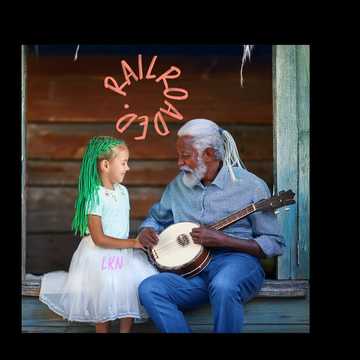
Railroaded. #KindergartenFestival
Delta blues, banjo, eerie, dark, whistling, horns, background vocal harmonies, harmonica, folk, longing, melancholy, pain, drama, fiddle
Railroaded. #KindergartenFestival
Delta blues, banjo, eerie, dark, whistling, horns, background vocal harmonies, harmonica, folk, longing, melancholy, pain, drama, fiddle
Lyrics
**Heads up that this is no longer a children's song -- since I went back to the original (first published as "Levee Song" circa 1894 & written in dialect). Then restored it.**
"I've been working on the railroad"...
No strumming on the old banjo.
end
Restoration/arrangement/new melody/additional lyrics Copyright 3-31-2025 by LKN
-----------------------------------------------------
“I’ve Been Working on the Railroad” began as an American song in the genre of “folk.” The names of its original songwriters have mostly been lost, so it’s credited today only as a “traditional.” Part of the problem with its accreditation may stem from the reality of its having several different authors: especially as it was commonplace, back in the day, to add one’s own new verse at the end of any folk song. And then some of those additional verses may have stuck (or not)… People built/changed songs around like this: together. So those songs were more like compilations.
Also, the first thing that seems to go with these old songs (right through the Tin Pan Alley era) is usually their (often-spoken) introductions: E.g., do you know the rarely heard intro to “Somewhere Over the Rainbow”? —I learned this tidbit from a sheet music preservationist with whom I have been lucky enough to study.
Meanwhile, you’re nine-years old and your then-teacher is having everyone sing children’s songs for the last hour of many class days. And you can’t even begin to comprehend that some of these fast, happy, redacted tunes that you’re all banging out en masse may actually have had their roots in much deeper themes of poverty, inequality, intense longing and unjust suffering.
Which is why I've called my own new version "Railroaded"... This slang term originally referred to the forceful acquisition of land by railroad companies back in the 1800s (when this song was written). Now, it describes the negative state of being unfairly coerced or manipulated, like being forced onto a train track with no control over one's final destination -- which is usually a terrible one.
For comparison, then — here is the standard children’s version of this song:
I've been working on the railroad
All the live-long day
I've been working on the railroad
Just to pass the time away
Can't you hear the whistle blowing,
Rise up so early in the morn
Can't you hear the captain shouting,
"Dinah, blow your horn!"
Dinah, won't you blow,
Dinah, won't you blow,
Dinah, won't you blow your horn?
Dinah, won't you blow,
Dinah, won't you blow,
Dinah, won't you blow your horn?
Someone's in the kitchen with Dinah
Someone's in the kitchen I know
Someone's in the kitchen with Dinah
Strummin' on the old banjo!
Singin' fee, fie, fiddly-i-o
Fee, fie, fiddly-i-o-o-o-o
Fee, fie, fiddly-i-o
Strummin' on the old banjo
Accreditation: traditional
(Though we do still know that the “in the kitchen with Dinah” section was written by J.H. Cave)