We Are What We Lost
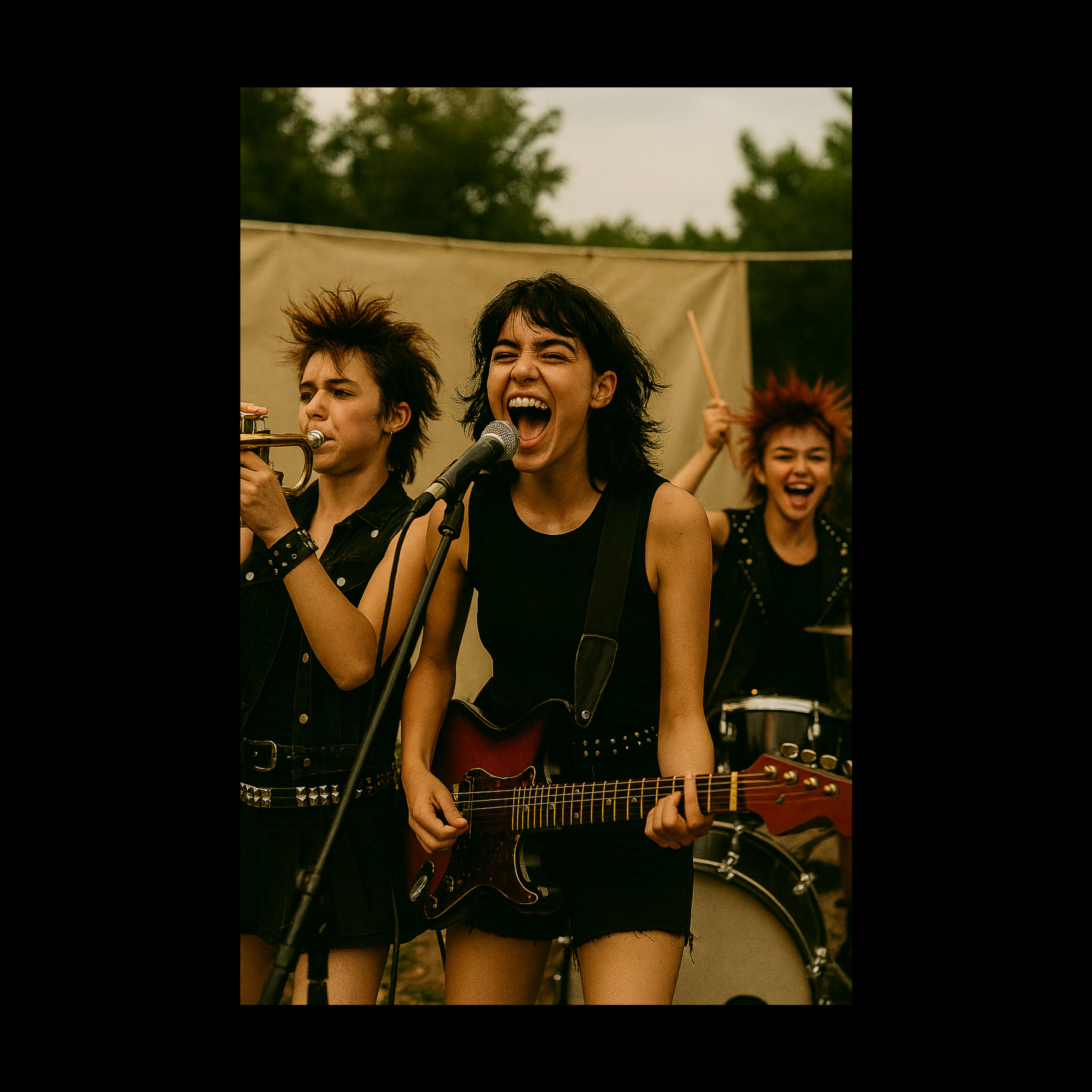
90s street punk song, fast tempo (180–200 BPM), raw and energetic, DIY basement band vibe. Sounds like teenagers just learning their instruments—slightly messy timing, imperfect playing, but full of enthusiasm and attitude. Distorted guitars with simple power chords, slightly out-of-tune bass, fast and chaotic drumming that occasionally rushes or drags. Vocals shouted rather than sung, group chant choruses, rebellious but earnest tone. Include a surprise trumpet line that comes in unexpectedly during the chorus or bridge—slightly off-key, bright and brash, almost like a school band instrument being pushed into punk music. The trumpet should contrast with the distortion but feel natural in its chaos, adding a weird uplifting energy. Lo-fi garage recording quality, like a demo tape from the 90s underground punk scene. Imperfect, loud, youthful, urgent, emotional. No polish, no modern production sheen—just raw teenage punk spirit and noise.
We Are What We Lost
90s street punk song, fast tempo (180–200 BPM), raw and energetic, DIY basement band vibe. Sounds like teenagers just learning their instruments—slightly messy timing, imperfect playing, but full of enthusiasm and attitude. Distorted guitars with simple power chords, slightly out-of-tune bass, fast and chaotic drumming that occasionally rushes or drags. Vocals shouted rather than sung, group chant choruses, rebellious but earnest tone. Include a surprise trumpet line that comes in unexpectedly during the chorus or bridge—slightly off-key, bright and brash, almost like a school band instrument being pushed into punk music. The trumpet should contrast with the distortion but feel natural in its chaos, adding a weird uplifting energy. Lo-fi garage recording quality, like a demo tape from the 90s underground punk scene. Imperfect, loud, youthful, urgent, emotional. No polish, no modern production sheen—just raw teenage punk spirit and noise.
Lyrics
Verse 1
We wrote our names in sediment,
not ink but oil and flame,
a signature in carbon dust
no river can reclaim.
The rocks are keeping receipts now,
in plastic and in bone,
a future fossil fingerprint
that calls the Earth our own.
Pre-Chorus
We didn’t ask permission
from the ice or from the air,
we just built our little empires
like the planet wasn’t there.
Chorus
Welcome to the Anthropocene,
where everything is seen
in layers of what we burned
and what we called “routine.”
If the Earth is keeping records
then the verdict’s in the stone—
we turned a living system
into something overthrown.
Verse 2
There’s plutonium in silence,
there’s microplastic rain,
a barcode in the ocean
that repeats our private name.
We called it “progress,” “growth,” and “gain,”
just words to calm the fear,
while the atmosphere was learning
how to disappear.
Pre-Chorus
And every broken ecosystem
is a sentence left unspun,
a paragraph of consequences
that we thought we had outrun.
Chorus
Welcome to the Anthropocene,
where nothing stays unseen,
not the smoke, not the numbers,
not the in-between.
If the loudest voice is power
then the silence has a cost—
we didn’t just inherit it,
we are what we lost.
Bridge
Maybe it’s not “humanity”
but systems carved in steel,
a machinery of hunger
that forgot what it could feel.
Not all hands on the lever,
not all voices in the room—
but all of us inside it
as it’s tightening its doom.
Final Chorus
So what do we become now,
in this geologic age?
Another line of warning?
Or the turning of the page?
If the Earth becomes the archive
and the future reads us whole—
will it find rebellion
or just a bottomless coal?