
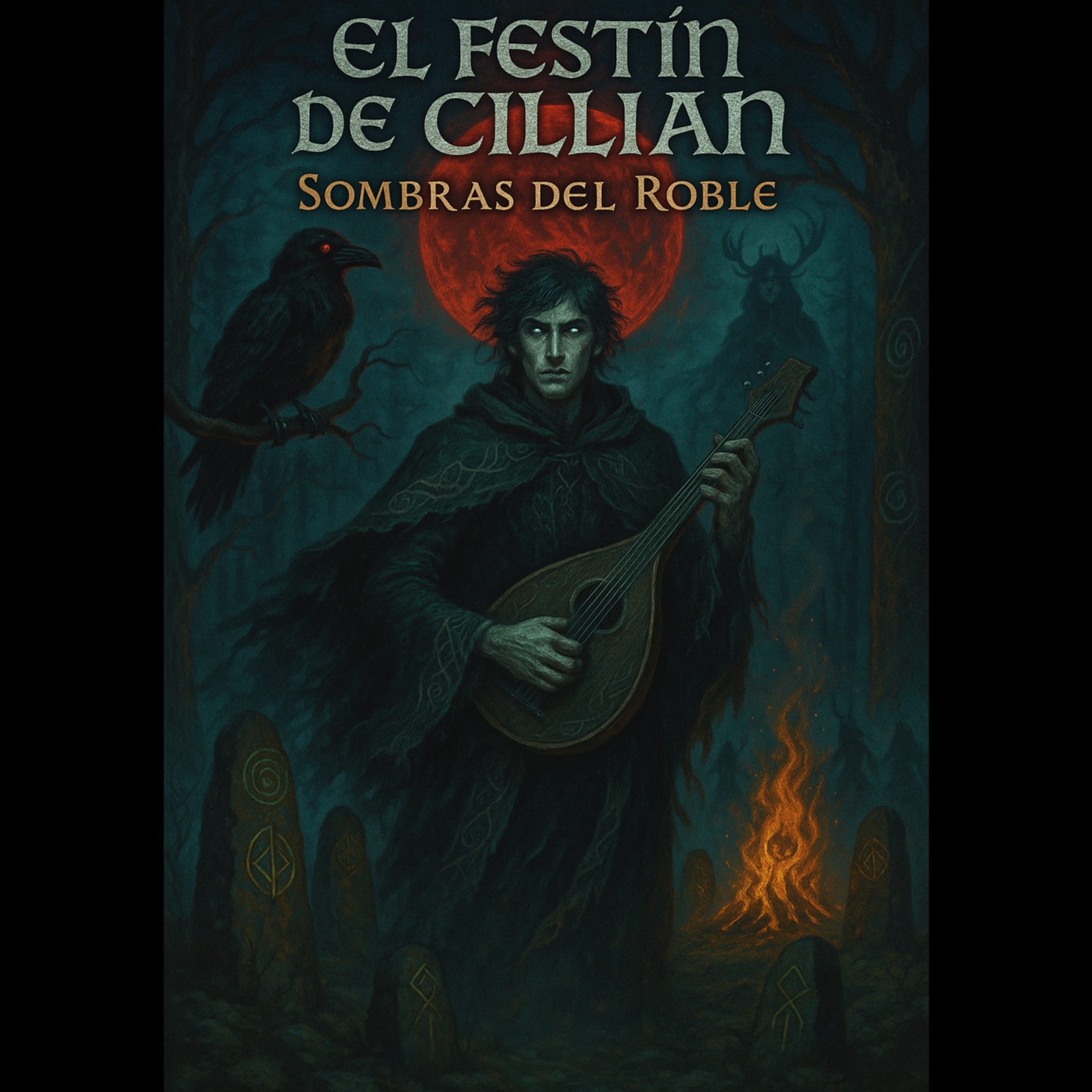
EL FESTÍN DE CILLIAN
The song is a dramatic, symphonic metal piece with a strong narrative feel. It features a male vocalist with a deep, resonant baritone voice, employing a clean vocal style throughout. The instrumentation includes distorted electric guitars providing heavy riffs and power chords, a prominent bass guitar laying down a solid foundation, and a dynamic drum kit with driving rhythms and frequent cymbal crashes. Orchestral elements, including strings and possibly brass, are integrated to enhance the epic and melancholic atmosphere. The song structure follows a typical verse-chorus format with distinct sections. The tempo is moderately fast, contributing to the energetic feel of the choruses. The key appears to be minor, reinforcing the somber mood of the lyrics. Production-wise, the mix is full and powerful, with the vocals sitting clearly above the dense instrumentation. There is a noticeable use of reverb on the vocals and some instruments, adding to the spacious and dramatic soundscape. The guitar solos are melodic and technically proficient, fitting within the overall structure of the song.
EL FESTÍN DE CILLIAN
The song is a dramatic, symphonic metal piece with a strong narrative feel. It features a male vocalist with a deep, resonant baritone voice, employing a clean vocal style throughout. The instrumentation includes distorted electric guitars providing heavy riffs and power chords, a prominent bass guitar laying down a solid foundation, and a dynamic drum kit with driving rhythms and frequent cymbal crashes. Orchestral elements, including strings and possibly brass, are integrated to enhance the epic and melancholic atmosphere. The song structure follows a typical verse-chorus format with distinct sections. The tempo is moderately fast, contributing to the energetic feel of the choruses. The key appears to be minor, reinforcing the somber mood of the lyrics. Production-wise, the mix is full and powerful, with the vocals sitting clearly above the dense instrumentation. There is a noticeable use of reverb on the vocals and some instruments, adding to the spacious and dramatic soundscape. The guitar solos are melodic and technically proficient, fitting within the overall structure of the song.
Lyrics
Se escucha el triste lamento de un laúd,
tan frágil como el mundo que negó de su virtud.
Un dolor germinado en el odio e ingratitud,
que hizo de su alma, su ataúd.
Llora, el silencio que lo condenó,
y en el cuello de su compañero escribe su adiós.
Arrulla la niebla al juglar que bebió,
de un cáliz de olvido, y su fe se extinguió.
Dicen que un fuego lo quiso guiar,
y una posa-da sin puerta lo dejó pasar...
Las copas susurraron un pacto al brindar
y espectros danzaron por su "libertad".
Y LA LUNA ROJA, RECIBIÓ SU CANCIÓN,
BAJO EL ABEDUL GRIS, CON LAS BRUJÁS DANZÓ.
SÓLO QUEDA EL ECO, QUE EL VIENTO ARRASTRÓ,
Y EN LA MISA NEGRA PARA SIEMPRE QUEDÓ.
su laúd desangraba el dolor,
su música era el precio, y único valor.
Renunció a la cruz y a su vana oración,
su alma era el pago, su arte y amor.
Y el vino que sabía a eternidad,
lo ataba a la tierra y al placer infernal.
La sangre de sus manos, fue el sello final,
Y el laúd se afinaba para el ritual.
Y LA LUNA ROJA, RECIBIÓ SU CANCIÓN,
BAJO EL ABEDUL GRIS, CON LAS BRUJÁS DANZÓ.
SÓLO QUEDA EL ECO, QUE EL VIENTO ARRASTRÓ,
Y EN LA MISA NEGRA PARA SIEMPRE QUEDÓ.
Donde la noche es eterna y no hay sol,
las sorginak reclaman a su fiel trovador.
Su música es nuestra, no habrá redención,
¡que resuene por siempre su dulce maldición!
Y LA LUNA ROJA, RECIBIÓ SU CANCIÓN,
BAJO EL ABEDUL GRIS, CON LAS BRUJÁS DANZÓ.
SÓLO QUEDA EL ECO, QUE EL VIENTO ARRASTRÓ,
Y EN LA MISA NEGRA PARA SIEMPRE QUEDÓ.
NO HAY CRUZ NI PERDÓN, EN SU MALDICIÓN,
SÓLO UNA MELODÍA, TEJIDA EN LAMENTO.
CUANDO SUENA ALREDEDOR DEL ABEDUL GRIS,
Y LOS MUERTOS SE LEVANTARÁN, Y ACUDEN AL FESTÍN.