
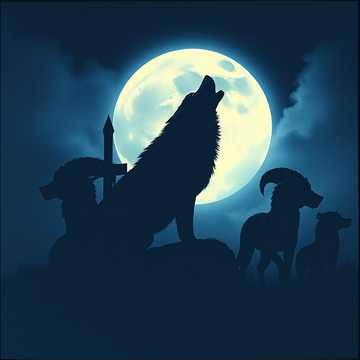
Pagan Calls - Odins Bane (Remastered)
in concerto, 130-140bpm [sensual, gritty, blend gothic rock with classical elements, synth-driven, bass-heavy, a theatrical duett story telling up tempo, melodic instrumentation utilise diminished fifths tension and release, spacious atmosphere, dynamic cadence, haunting voice] 6/8ths tempo, 3/4ths, dynamic modulationsA solo male vocalist performs a sustained, vibrato-rich vocalization. The vocal technique involves a continuous, wavering pitch, creating a mournful and expressive sound. The vocal range is in the baritone register, with a clear, resonant tone. blend it in as a gregorian choral hymn, There are no accompanying instruments, and the production is dry, with no discernible effects like reverb or delay. The tempo is slow, and the dynamic is consistent throughout the short piece. The vocal performance is the sole musical element, emphasizing its raw and unadorned quality. - Use the recording as a baseline for six vocal melodies -
Pagan Calls - Odins Bane (Remastered)
in concerto, 130-140bpm [sensual, gritty, blend gothic rock with classical elements, synth-driven, bass-heavy, a theatrical duett story telling up tempo, melodic instrumentation utilise diminished fifths tension and release, spacious atmosphere, dynamic cadence, haunting voice] 6/8ths tempo, 3/4ths, dynamic modulationsA solo male vocalist performs a sustained, vibrato-rich vocalization. The vocal technique involves a continuous, wavering pitch, creating a mournful and expressive sound. The vocal range is in the baritone register, with a clear, resonant tone. blend it in as a gregorian choral hymn, There are no accompanying instruments, and the production is dry, with no discernible effects like reverb or delay. The tempo is slow, and the dynamic is consistent throughout the short piece. The vocal performance is the sole musical element, emphasizing its raw and unadorned quality. - Use the recording as a baseline for six vocal melodies -
Lyrics
Translation in english below.
--------------------------------------------------------------------------------------
Six vocalisations filling the octave space in harmony
Verse
Sønn av Loke og Angerboda.
Bror til Nidhogg og Hel
Kom Ragnarok vil han sluke Æsene.
Bastet og bundet til en dag friheten kommer.
Vidar vil bli hans bane
refreng
Fenris arg og sulten
også kjent som Odins banemann
Verse
Født i Jotunheimen av Jotneslekt
Bastet og bundet til en dag friheten kommer.
Vidar vil bli hans bane
akk ve og vel Odin falle for Fenris vil.
Verse
Sønn av Loke og Angerboda.
Bror til Nidhogg og Hel
Kom Ragnarok vil han sluke Æsene.
Bastet og bundet til en dag friheten kommer.
Vidar vil bli hans bane
refreng
Fenris arg og sulten
også kjent som Odins banemann
Verse
Født i Jotunheimen av Jotneslekt
Bastet og bundet til en dag friheten kommer.
Vidar vil bli hans bane
akk ve og vel Odin falle for Fenris vil.
----------------------------------------------------------------------------------
Here is the full translation of the provided text into English:
Verse
Son of Loki and Angrboda.
Brother to Nidhogg and Hel.
When Ragnarok comes, he will devour the Æsir.
Bound and chained until the day freedom arrives.
Vidar will be his bane.
Chorus
Fenris, angry and hungry,
Also known as Odin’s slayer.
Verse
Born in Jotunheim of Jotun kin.
Bound and chained until the day freedom arrives.
Vidar will be his bane.
Alas, woe and well, Odin will fall to Fenris’ will.
Verse
Son of Loki and Angrboda.
Brother to Nidhogg and Hel.
When Ragnarok comes, he will devour the Æsir.
Bound and chained until the day freedom arrives.
Vidar will be his bane.
Chorus
Fenris, angry and hungry,
Also known as Odin’s slayer.
Verse
Born in Jotunheim of Jotun kin.
Bound and chained until the day freedom arrives.
Vidar will be his bane.
Alas, woe and well, Odin will fall to Fenris’ will.
---
**Notes on the translation:**
- The text is a poetic or lyrical piece rooted in Norse mythology, referring to Fenris (Fenrir), the monstrous wolf, son of Loki and Angrboda, brother to Nidhogg (the world serpent) and Hel (goddess of the underworld).
- "Æsir" refers to the Norse gods.
- "Ragnarok" is the prophesied end of the world in Norse mythology.
- "Vidar" is the god destined to slay Fenrir.
- The phrase "akk ve og vel" is an expression of lament, translated here as "alas, woe and well" to maintain its poetic tone.
- The word "bastet" likely refers to Fenrir being bound or chained, as in the myth where he is tied with a magical fetter. It is translated here as "bound and chained" for clarity.