
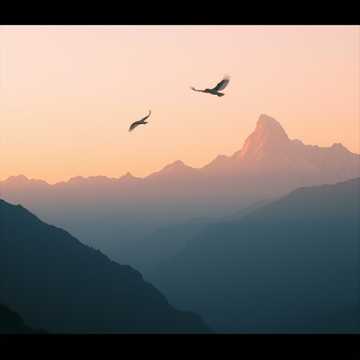
The Dawn of the Mountains / 山之初光
[Setting: The stage opens with a vast painted scroll unfurling from the ceiling to the floor, depicting mountains, rivers, and mythic beasts. The scroll glows with moving light, giving the illusion of a living landscape. Actors costumed as primordial spirits emerge from the mist. In the center, a ritual altar with bronze tripods burns with fragrant smoke. The scene establishes the sacred geography of the world.] [Music & Style: Ancient Chinese court ritual music fused with Chu-style shamanic chants and early Han yuefu lyric intonations. Instruments: guqin, sheng, xun (ocarina), bronze bells, and deep frame drums. The singing style alternates between Kunqu lyric clarity and Qinqiang declamation, evoking both mystery and grandeur.] [Incantations: Invocation lines in archaic Chinese incantatory form, representing the Daoist-shamanic breath of the cosmos. Glosses provided after each.]
The Dawn of the Mountains / 山之初光
[Setting: The stage opens with a vast painted scroll unfurling from the ceiling to the floor, depicting mountains, rivers, and mythic beasts. The scroll glows with moving light, giving the illusion of a living landscape. Actors costumed as primordial spirits emerge from the mist. In the center, a ritual altar with bronze tripods burns with fragrant smoke. The scene establishes the sacred geography of the world.] [Music & Style: Ancient Chinese court ritual music fused with Chu-style shamanic chants and early Han yuefu lyric intonations. Instruments: guqin, sheng, xun (ocarina), bronze bells, and deep frame drums. The singing style alternates between Kunqu lyric clarity and Qinqiang declamation, evoking both mystery and grandeur.] [Incantations: Invocation lines in archaic Chinese incantatory form, representing the Daoist-shamanic breath of the cosmos. Glosses provided after each.]
Lyrics
山海經 / Classic of Mountains and Seas / 山海经
https://en.wikipedia.org/wiki/Classic_of_Mountains_and_Seas
Act 1 Scene 1 — The Dawn of the Mountains / 山之初光
Setting: The stage opens with a vast painted scroll unfurling from the ceiling to the floor, depicting mountains, rivers, and mythic beasts. The scroll glows with moving light, giving the illusion of a living landscape. Actors costumed as primordial spirits emerge from the mist. In the center, a ritual altar with bronze tripods burns with fragrant smoke. The scene establishes the sacred geography of the world.
Music & Style: Ancient Chinese court ritual music fused with Chu-style shamanic chants and early Han yuefu lyric intonations. Instruments: guqin, sheng, xun (ocarina), bronze bells, and deep frame drums. The singing style alternates between Kunqu lyric clarity and Qinqiang declamation, evoking both mystery and grandeur.
Incantations: Invocation lines in archaic Chinese incantatory form, representing the Daoist-shamanic breath of the cosmos. Glosses provided after each.
⸻
Verse 1
青山起兮,云烟腾,
洪荒息兮,万象生,
灵鸟舞兮,声相应,
初光照兮,大道明。
[咒曰]:启山之灵。
Incantation gloss: “Awaken the spirit of the Mountain.”
Verse 2
黄河源兮,九曲长,
昆仑高兮,白雪扬,
神兽鸣兮,守四方,
天地开兮,道自彰。
[咒曰]:昆仑为中。
Incantation gloss: “Kunlun is the Center.”
Chorus 1
东海涌兮,浪无穷,
西岳立兮,影重重,
南山歌兮,百木融,
北海息兮,雪苍穹。
[咒曰]:四海同心。
Incantation gloss: “The Four Seas are of one heart.”
Verse 3
灵泉涌兮,化百川,
神草长兮,延人年,
巫觋舞兮,接天言,
天地契兮,不夜天。
[咒曰]:泉生无极。
Incantation gloss: “Springs flow without limit.”
Verse 4
朱鸟飞兮,火焰明,
青龙升兮,万象宁,
白虎啸兮,守乾坤,
玄武立兮,佑苍生。
[咒曰]:四象同德。
Incantation gloss: “The Four Symbols share one virtue.”
Chorus 2
山之经兮,记天地,
海之志兮,载神奇,
人之梦兮,与道期,
灵之声兮,永不移。
[咒曰]:道贯山海。
Incantation gloss: “The Dao threads through mountains and seas.”
Bridge
鼓震兮,魂欲飞,
钟鸣兮,境方辉,
舞动兮,天地围,
歌起兮,道不归。
[咒曰]:灵舞合天。
Incantation gloss: “The Spirit Dance unites with Heaven.”
Chorus 3
九州定兮,脉相连,
山海合兮,化人间,
灵兽引兮,渡千年,
大道循兮,永无边。
[咒曰]:天地同声。
Incantation gloss: “Heaven and Earth share one voice.”
Chorus 4
星辰照兮,夜未央,
古志传兮,世无荒,
神话续兮,歌流长,
山海经兮,永辉煌。
[咒曰]:经启万世。
Incantation gloss: “The Classic opens ten thousand generations.”
Outro
山高兮,道远兮,
海阔兮,人和兮,
灵长兮,德昌兮,
天地合兮,万古常兮。
[咒曰]:大道无疆。
Incantation gloss: “The Great Dao is boundless.”