
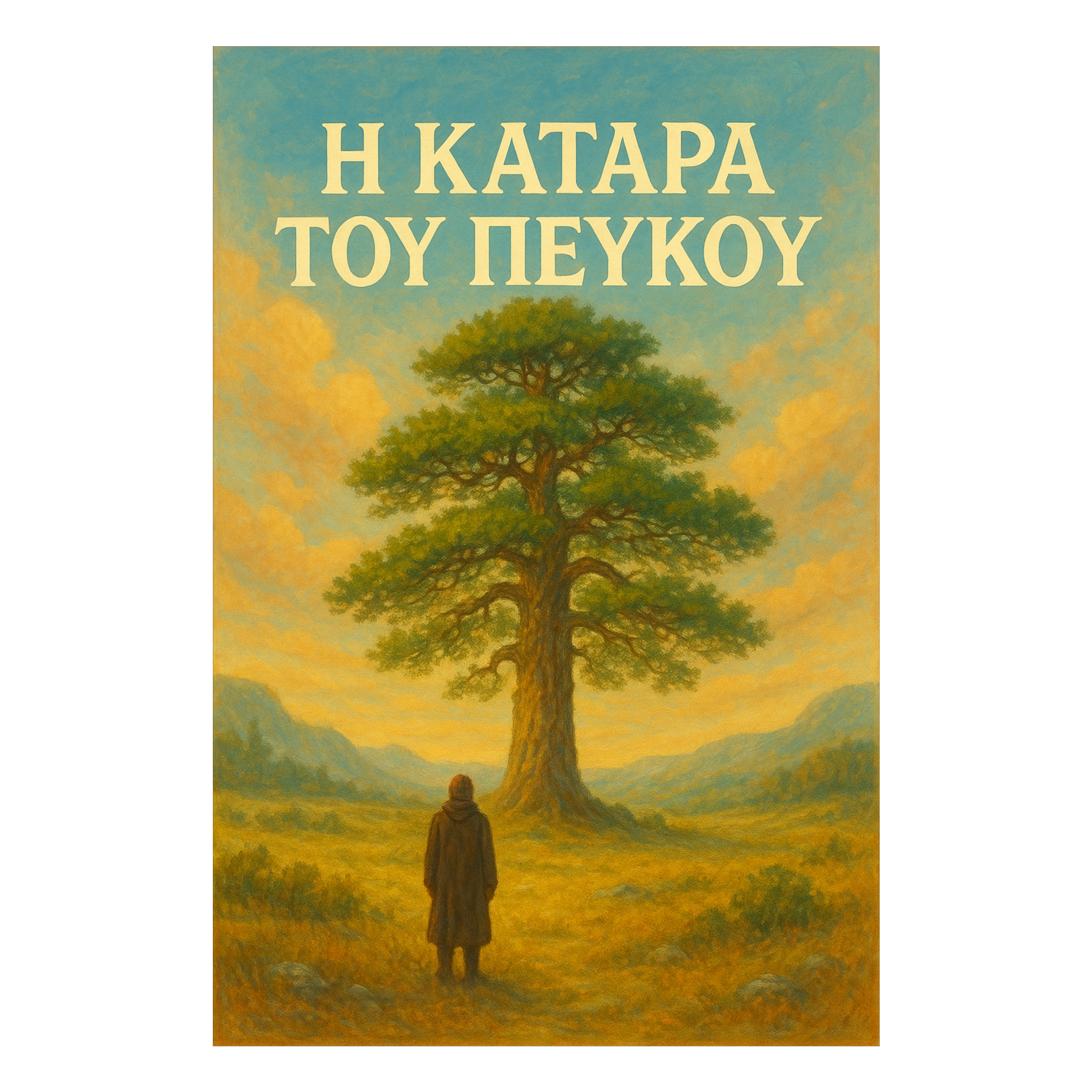
Η ΚΑΤΑΡΑ ΤΟΥ ΠΕΥΚΟΥ (The Curse of the Pine Tree)
Starts with an ethereal spoken intro over ambient drones and ancient-inspired choral pads. The verse blends Greek Rock rhythms with synth-rock textures—crisp drums, lush synth layers, and plucked bouzouki accents. After each verse, instrumental breaks add dramatic synth melodies and traditional percussion. Lead vocals soar with dynamic back vocals in the choruses. A soaring guitar solo, echoing mythodea grandeur, drives the bridge, then builds to a powerful, layered outro.
Η ΚΑΤΑΡΑ ΤΟΥ ΠΕΥΚΟΥ (The Curse of the Pine Tree)
Starts with an ethereal spoken intro over ambient drones and ancient-inspired choral pads. The verse blends Greek Rock rhythms with synth-rock textures—crisp drums, lush synth layers, and plucked bouzouki accents. After each verse, instrumental breaks add dramatic synth melodies and traditional percussion. Lead vocals soar with dynamic back vocals in the choruses. A soaring guitar solo, echoing mythodea grandeur, drives the bridge, then builds to a powerful, layered outro.
Lyrics
Η ΚΑΤΑΡΑ ΤΟΥ ΠΕΥΚΟΥ
Η Κατάρα του Πεύκου είναι ένα από τα πιο συγκινητικά αποσπάσματα από το κλασικό παιδικό έργο του Ζαχαρία Παπαντωνίου, Τα Ψηλά Βουνά (1918).
Μέσα από αυτή την ιστορία, ο Παπαντωνίου μιλάει για την ύβρη του ανθρώπου απέναντι στη φύση και για την ηθική τιμωρία που ακολουθεί.
Ο Γιάννης, κόβοντας τον μοναδικό πεύκο του κάμπου, χάνει τον προσανατολισμό του και εγκλωβίζεται στην ερημιά — ένα συμβολικό ταξίδι εξιλέωσης.
Τα Ψηλά Βουνά, γραμμένα στη δημοτική, αποτέλεσαν σταθμό στην ελληνική παιδική λογοτεχνία και στο εκπαιδευτικό ιδεώδες της εποχής.
Μέσα από την απλότητα, τη φιλία και τη ζωή στη φύση, ο Παπαντωνίου διδάσκει την αξία του σεβασμού και της συνύπαρξης με το φυσικό κόσμο.
Η Κατάρα του Πεύκου παραμένει το πιο ποιητικό και σκοτεινό απόσπασμα αυτού του έργου — ένας ύμνος και ταυτόχρονα μια προειδοποίηση.
INTRO
Στα χωράφια ξεχωρίζει ένας πεύκος, επιβλητικός, με σκιές βαριές και ρετσίνι που λάμπει σαν κεχριμπάρι.
Λένε πως μέσα του κοιμάται μια νεράιδα..
Ο Γιάννης τον πελεκά χρόνια για το ρετσίνι, ώσπου τον κόβει για να πουλήσει τα ξύλα.
Μα η φύση τον καταράστηκε· δεν μπορεί να φύγει από τον κάμπο. Ο λόγγος τον κρατάει εγκλωβισμένο.
Καλοκαίρια και χειμώνες περνούν· ο Γιάννης παραμένει στον ίδιο τόπο, κουρασμένος και διψασμένος.
Η ιστορία του πεύκου και της κατάρας του ζει στα χαρτιά και στο τραγούδι, για όσους θυμούνται.
Verse
«Γιάννη, γιατί έκοψες τον πεύκο;
γιατί; γιατί;»
—«Αγέρας θα είναι» λέει ο Γιάννης,
και περπατεί.
Verse
Ανάβει η πέτρα,
το λιβάδι βγάζει φωτιά·
να έβρισκε ο Γιάννης μια βρυσούλα,
μια ρεματιά!
Verse
Μέσα στο λιοπύρι,
μέσα στον κάμπο,
να ένα δεντρί...
Ξάπλωσε ο Γιάννης από κάτω
δροσιά να βρει.
Verse
Το δέντρο παίρνει τα κλαδιά του
και περπατεί!
«Δε θ’ ανασάνω» λέει ο Γιάννης·
«γιατί; γιατί;»
Verse
—«Γιάννη, που κίνησες να φτάσεις;»
—«Στα Δυο χωριά».
—«Κι ακόμα βρίσκεσαι δω κάτω;
Πολύ μακριά!»
Verse
—«Εγώ πηγαίνω, όλο πηγαίνω.
Τι έφταιξα εγώ;
Σκιάζεται ο λόγκος και με φεύγει,
γι’ αυτό είμαι δω.»
Verse
Πότε ξεκίνησα; Είναι μέρες...
για δυο, για τρεις...
Ο νους μου σήμερα δεν ξέρω,
τ’ είναι βαρύς.
Verse
Να μια βρυσούλα, πιες νεράκι,
να δροσιστείς.
Σκύβει να πιεί νερό στη βρύση,
στερεύει ευθύς.
Verse
Οι μέρες πέρασαν κι οι μήνες,
φεύγει ο καιρός·
στον ίδιον τόπο είναι ο Γιάννης
κι ας τρέχει εμπρός...
Verse
Να το χινόπωρο, να οι μπόρες!
μα πού κλαρί;
Χτυπιέται ορθός με το χαλάζι,
με τη βροχή.
Verse
«Γιάννη, γιατί έσφαξες το δέντρο
το σπλαχνικό,
που έριχνε ίσκιο στο κοπάδι
και στο βοσκό;»
Verse
Ο πεύκος μιλάει στον αέρα
—τ’ ακούς; τ’ ακούς;—
και τραγουδούσε σαν φλογέρα
στους μπιστικούς.
Verse
Σακάτης ήτανε κι ολόρθος,
ως τη χρονιά
που τον γκρέμισες για ξύλα,
Γιάννη φονιά!
Verse
Πέφτει σαν δέντρο από το πελέκι...
Βογκάει βαριά.
Μακριά του στάθηκε το δάσος,
πολύ μακριά.
Verse
Εκεί τριγύρω ούτε χορτάρι
φωνή καμιά.
Στ’ αγκάθια πέθανε, στον κάμπο,
στην ερημιά.
outro
The Curse of the Pine Tree
by Zacharias Papantoniou
(Literal English Translation)
In the fields stands a pine tree, tall and solemn,
its heavy shadows deep, its resin gleaming like amber.
They say that within it sleeps a fairy...
For years, Giannis cut into its bark for resin,
until one day he felled it to sell the wood.
But nature cursed him — he could no longer leave the plain.
The forest held him captive.
Summers and winters passed;
Giannis remained in the same place, weary and thirsty.
The tale of the pine and its curse
lives on in paper and in song — for those who remember.
“John, why did you cut the pine?”
“Why, oh why?”
“It must have been the wind,” said John,
and went on his way.
The stone burned, and the meadow
caught fire;
if only John could find a spring,
a brook nearby!
Beneath the blazing sun, in the plain,
there was a tree.
John went and sat beneath its shadow
to rest.
The tree lifted its roots and branches
and moved away.
“I cannot breathe,” said John,
“why, oh why?”
“John, where are you going?”
“To the Twin Villages.”
“Then why are you standing here below,
so far away?”
“I walk and walk,” says John,
“what have I done?
The forest flees from me,
and that’s why I’m left alone.”
“When did I leave? Two days ago,
perhaps three.
Today my head feels heavy,
I do not remember.”
“Here is a little spring, traveler,
drink and cool your brow.”
He bent to drink,
but the spring had dried up.
Days and months passed,
time flowed.
John remained always in the same place,
and yet kept walking.
Autumn came, and storms—
but where was a branch?
He stood upright in rain and hail,
enduring.
“John, why did you cut the pine,
the gentle one,
that gave shade to the flocks,
to you, to the sun?”
The pine murmurs in the wind,
do you hear, do you hear?
It once sang like a flute
to the shepherds.
It stood half-crippled,
but always upright.
You struck it down for firewood,
murderer John!
It fell with thunder beneath the axe—
what a sound!
The forest withdrew,
and left you alone.
Around you—no grass,
no voice, none.
In the thorns you died,
in the barren field.
The Curse of the Pine Tree is one of the most moving episodes from Zacharias Papantoniou’s classic children’s book The High Mountains (Ta Psilá Vouná, 1918).