新解釈・北風と太陽
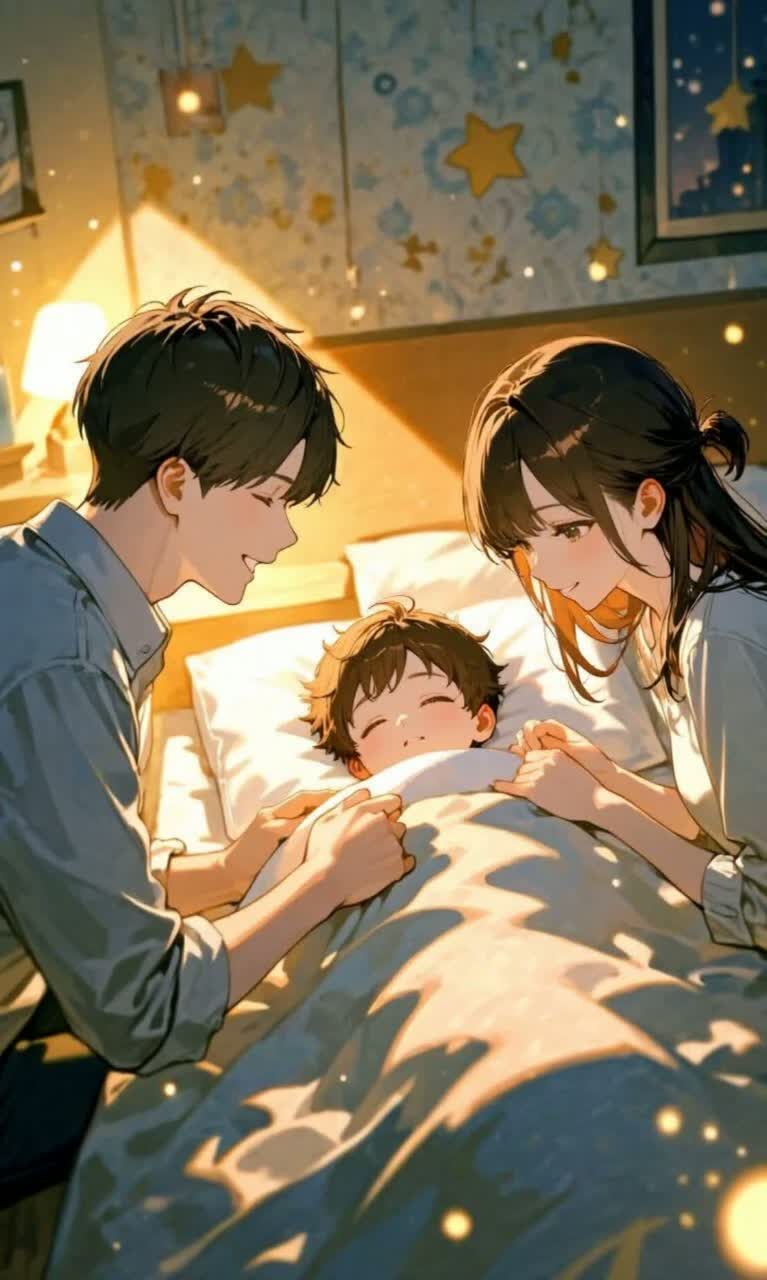
Japanese spoken-word lullaby with light melodic phrasing. Mostly spoken narration, sometimes softly drifting into melody. This is a bedtime story that slowly becomes music. Natural, calm Japanese pronunciation. Intimate, warm, and slightly imperfect. Three distinct voices: Mother: soft female voice, gentle, warm, sometimes lightly singing Child: very young, sleepy, whispering Father: calm, low-pitched male voice, natural, slightly awkward Voices should feel like a family at bedtime. No theatrical acting, no musical-style singing. Music is minimal and slow: soft pads, very gentle harmony, no strong rhythm. After the final whisper, there is a brief silence. Then the same lullaby-like music returns quietly for a few seconds without vocals, and fades out naturally. Keep the ending short and subtle.
新解釈・北風と太陽
Japanese spoken-word lullaby with light melodic phrasing. Mostly spoken narration, sometimes softly drifting into melody. This is a bedtime story that slowly becomes music. Natural, calm Japanese pronunciation. Intimate, warm, and slightly imperfect. Three distinct voices: Mother: soft female voice, gentle, warm, sometimes lightly singing Child: very young, sleepy, whispering Father: calm, low-pitched male voice, natural, slightly awkward Voices should feel like a family at bedtime. No theatrical acting, no musical-style singing. Music is minimal and slow: soft pads, very gentle harmony, no strong rhythm. After the final whisper, there is a brief silence. Then the same lullaby-like music returns quietly for a few seconds without vocals, and fades out naturally. Keep the ending short and subtle.
Lyrics
むかしむかし、
あるところに
風と太陽がいました ──
ふたりは、
どちらが一番強いのか、
ずっと、言い争っていました ──
そこへ、
ひとりの旅人がやってきたのです。
むかしむかし
かぜと、おひさまが
たびびとをみつけました
どっちが
じょうずにできるかって
そんな、おはなしよ
それ、もう、
しってるよ……
ええと……
じゃあ、ちょっとだけ
かえてみようか
びゅーって
かぜがふいて
ごうごうって
いっぱいふいたんだ
でも
ダメだったんだって
それでね・・・
可愛い寝顔ね
愛してるわ♪
………