
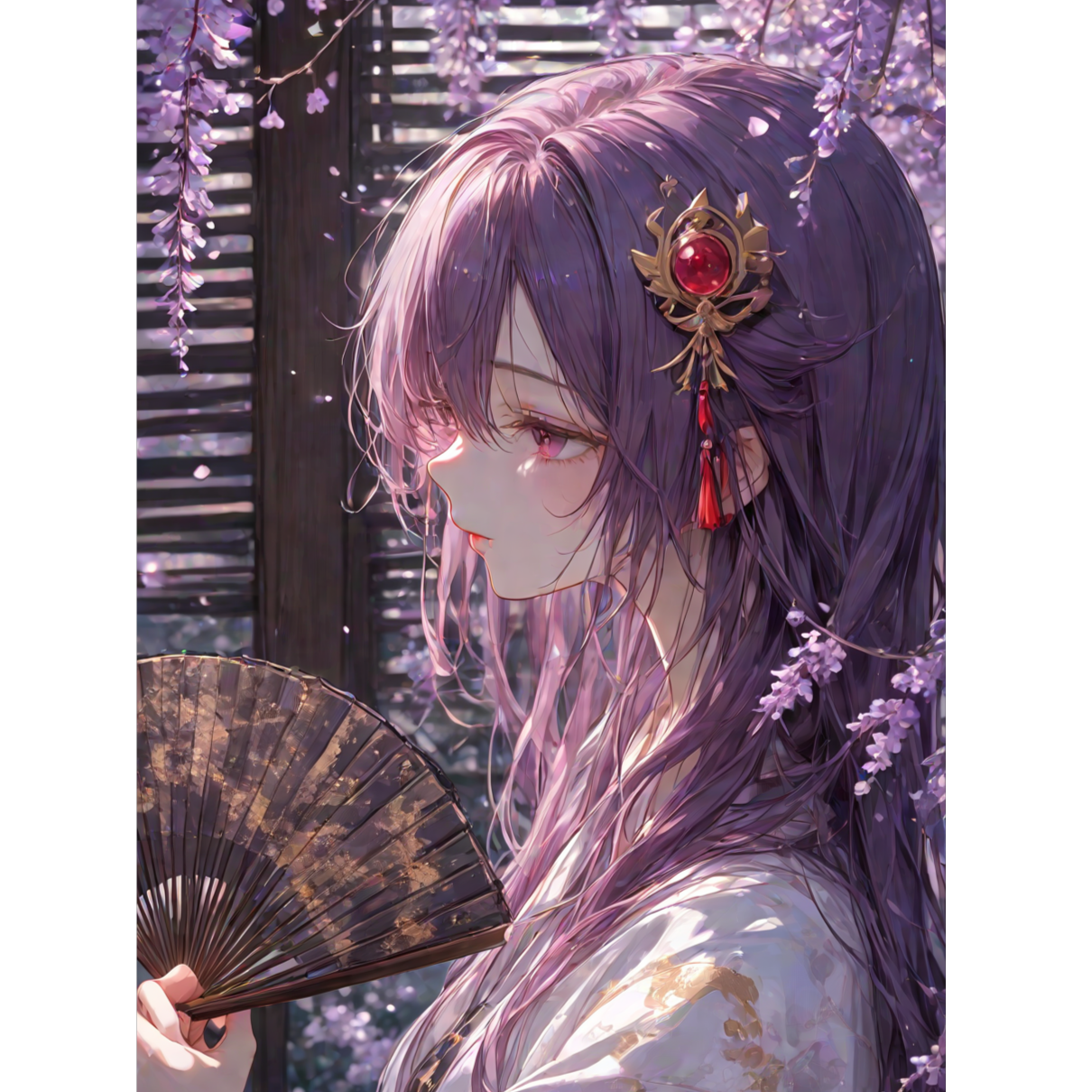
『翳(かげ)る花 』平安Rock―源氏物語 紫の上編
Opening with sparse koto and whispered Japanese female vocals, the intro floats in 4/4 at 95 BPM, cloaked in elegant minor-key harmonies. Shamisen and restrained taiko enter gradually, joined by clean electric guitar. The verses remain sparse, vocals fragile. The chorus swells: taiko thunder, emotional vocal power, overdriven guitar, full koto runs, all lending a cinematic grief and hidden defiance. The texture unites Heian grace with rock’s intensity, building and receding with haunting beauty, closing on a solo koto and soft vibrato, echoing unresolved sorrow.
『翳(かげ)る花 』平安Rock―源氏物語 紫の上編
Opening with sparse koto and whispered Japanese female vocals, the intro floats in 4/4 at 95 BPM, cloaked in elegant minor-key harmonies. Shamisen and restrained taiko enter gradually, joined by clean electric guitar. The verses remain sparse, vocals fragile. The chorus swells: taiko thunder, emotional vocal power, overdriven guitar, full koto runs, all lending a cinematic grief and hidden defiance. The texture unites Heian grace with rock’s intensity, building and receding with haunting beauty, closing on a solo koto and soft vibrato, echoing unresolved sorrow.
Lyrics
『翳(かげ)る花 』平安Rock―源氏物語 紫の上 少女譚
まだ恋も知らぬまま、「理想の姫君」として育てられた少女。
御簾の奥に閉じ込められた心は、やがて静かに叫び出す。
「笑え」と命じられる世界の中で、彼女が見つめたのは“自由”という罪。
――平安の香とロックの炎が交わる、紫の上・少女期の心を描いた哀しき抒情詩。
和楽器の静寂とエレキギターの衝動が溶け合い、
沈黙の中で燃える“声なき反逆”を歌い上げる。
"Shadowed Flowers" Heian Rock - The Tale of Genji: Murasaki no Ue's Girlhood
A young girl raised as the "ideal princess," never knowing the true essence of love.
Her heart, locked behind the screens, begins to silently cry out.
In a world commanded to "laugh," she gazes upon the sin of "freedom."
-- A sad lyric poem depicting the heart of Murasaki no Ue in her youth, where the fragrance of the Heian period intertwines with the flames of rock.
The serenity of Japanese instruments and the impulse of electric guitar blend together,
sing of a "silent rebellion" burning in the silence.
『翳(かげ)る花』
【序(じょ)】
薄紅(うすくれなゐ)の春風に 袖を濡らすや
夢と知りても 醒めぬあはれ
現代語訳
淡い春の風に吹かれて、涙で袖を濡らす。
それが夢だとわかっていても、醒めたくないほどの切なさ。
【一(いち)】
(Verse 1)
御簾(みす)の奥 光(ひかり)淡く
君も知らぬ 恋の香(か)をば
胸に秘めて 言の葉もなし
笑(ゑ)まへと命(めい)ずる 声の冷たさ
現代語訳
御簾(みす)の向こう、やわらかな光が差し込む。
あなたさえ気づかぬ恋の香りを、
胸の奥に隠したまま、言葉にはできず。
「笑いなさい」と命じるその声の、なんと冷たいことか。
【二(に)】
(Verse 2)
人の言(こと) 道(みち)のならひ
形ばかりの花と咲かむ
心のままに生くることぞ
罪と知られて 涙凍る
現代語訳
人々の言葉や、世の“正しさ”という掟。
私はただ形だけの花として咲くのでしょう。
心のままに生きるということが、
罪とされ、涙が凍りついていくのです。
【間奏(かんそう)】
ひとへに白き 衣(ころも)の裏
紅(くれなゐ)匂ふ 夢ひとひら
現代語訳
見まっ白な衣の裏には、
密やかに紅(くれない)の夢が香る。
【副歌(Chorus)】
われは誰(た)が手の操(あやつ)り人形(にんぎょう)ぞ
笑へと申す 仮(かり)の面(おもて)
真(まこと)の声は 風の彼方(かなた)
月に問ふも 答へなし
現代語訳
私は誰の手によって動かされている人形なのか。
「笑え」と言われてつける、仮面の笑顔。
本当の声は、風の彼方へと消えていく。
月に問いかけても、返ってくる答えはない。
【三(さん)】
(Verse 3)
御簾の影 鏡の中
映るは我か 他人(ひと)の夢か
やがて明日(あす)は 契(ちぎ)りの夜
髪に香(か)を焚(た)き 声を殺(ころ)す
現代語訳
御簾の陰、鏡の中に映る姿。
それは私なのか、それとも誰かが描いた夢なのか。
そして明日は、婚いの夜。
髪に香を焚きながら、心の声を殺す。
【終(しゅう)】
(Outro)
あはれ 桜の散るごとく
心もまた 朽ち果つるらむ
君の名を呼ぶこと叶はず
人形(ひとがた)として 夜に咲く
現代語訳
あぁ、桜が散るように、
私の心もいずれ朽ちてゆくのでしょう。
あなたの名を呼ぶことも叶わぬまま、
ただ“人形”として、夜にひっそりと咲くのです。
(English version of 「翳る花 」)
Intro
In pale spring light, my sleeves are wet—
A dream I know, yet cannot wake.
Verse 1
Behind the blinds, the dawn is faint,
A scent of love I cannot name.
They tell me, “Smile, my dear, with grace.”
I freeze my tears, I hide my flame.
Verse 2
Tradition binds, a noble’s way,
A flower shaped, not free to bloom.
To live my heart is called a sin,
So I stay silent in this room.
Pre-Chorus
Beneath white robes, a secret red—
A fleeting dream I dare not spread.
Chorus
Am I but a doll in borrowed hands?
Forced to smile by cold command.
My true voice lost beyond the breeze,
The moon won’t answer what I plea.
Verse 3
In mirrored glass, who do I see?
A stranger dressed to wed, not me.
Tomorrow’s vow, tonight I weep—
With scented hair, my heart I keep.
Final Chorus
Like cherry blooms that fade and fall,
My heart will wither, after all.
Your name unspoken, tears concealed,
A porcelain girl—my fate is sealed.
Outro
Though flowers fall and time will pass,
My soul remains beneath the glass.