
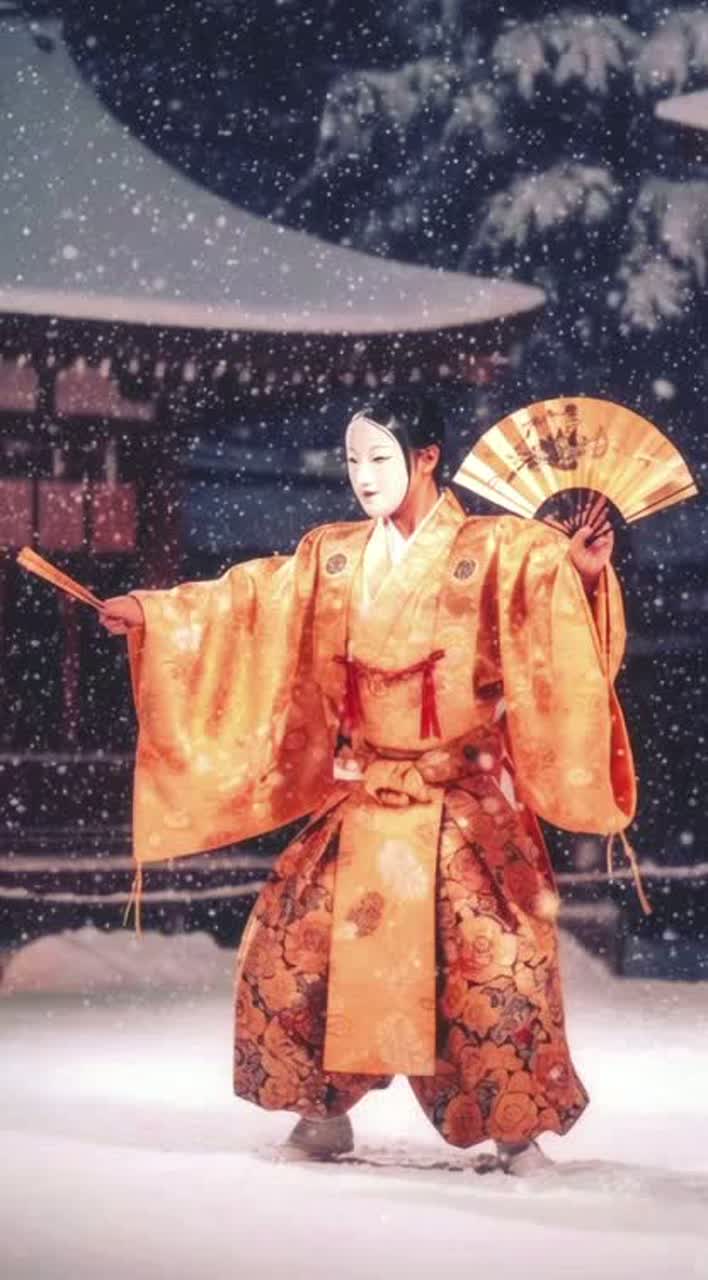
除夜の鐘 (🇯🇵🗾Cover)New Year's Eve bell
The solemn and mysterious Noh stage evokes the ancient Joya no Kane ritual, capturing tranquil meditation in medieval Japanese temple ceremonies amid winter's still air. A male shite, wearing a solemn mask, performs slow symbolic dance on a simple wooden stage with pine tree backdrop. A male and female Noh chanting uses deep, resonant diaphragm vocalization, prioritizing word rhythm and dynamics over melody, with gliding pitches and emotionally drawn-out syllables. Japanese accompanied by piercing nōkan flute, kotsuzumi and ōtsuzumi drums for tension, and taiko for deep bell-like reverberations. A male and female mixed jiutai chorus (8-10 singers) chants in Kongō-style rhythm, building delicately without crescendo. Free-flowing chant rhythm shifts to eight-beat patterns, rising from quiet introspection to profound resonance echoing through snowy temple halls. Incorporating Shinto-Buddhist influences, repetitive "kan. kan.." motifs evoke bell sounds, emphasizing purification
除夜の鐘 (🇯🇵🗾Cover)New Year's Eve bell
The solemn and mysterious Noh stage evokes the ancient Joya no Kane ritual, capturing tranquil meditation in medieval Japanese temple ceremonies amid winter's still air. A male shite, wearing a solemn mask, performs slow symbolic dance on a simple wooden stage with pine tree backdrop. A male and female Noh chanting uses deep, resonant diaphragm vocalization, prioritizing word rhythm and dynamics over melody, with gliding pitches and emotionally drawn-out syllables. Japanese accompanied by piercing nōkan flute, kotsuzumi and ōtsuzumi drums for tension, and taiko for deep bell-like reverberations. A male and female mixed jiutai chorus (8-10 singers) chants in Kongō-style rhythm, building delicately without crescendo. Free-flowing chant rhythm shifts to eight-beat patterns, rising from quiet introspection to profound resonance echoing through snowy temple halls. Incorporating Shinto-Buddhist influences, repetitive "kan. kan.." motifs evoke bell sounds, emphasizing purification
Lyrics
除夜の鐘 (🇯🇵🗾Cover)New Year's Eve bell
( Jo-ya no Ka-ne )
※Remixコンテスト応募作品です。This is a remix contest entry. ⭐英語訳、日本語(生成用)下にあります。⭐English translation and Japanese (for generation) are below.
※この楽曲は日本文化にインスピレーションを得て作られたフィクションです。*This song is a work of fiction inspired by Japanese culture.
「除夜の鐘」は、中国の宋時代に起源を持ち、鎌倉時代に禅宗とともに日本へ伝わり、江戸時代に全国的に広まった約800年近く続く伝統です。The tradition of ringing the bell on New Year's Eve has its origins in the Song Dynasty in China, was introduced to Japan along with Zen Buddhism during the Kamakura period, and spread nationwide during the Edo period, making it a tradition that has continued for nearly 800 years.
また、「能」は、起源を奈良時代(8世紀頃)の中国由来の散楽・猿楽などの芸能に遡り、約1300年以上の歴史を持つ日本最古の舞台芸術です。 " 能 - Noh - " is the oldest performing art in Japan, with a history of over 1,300 years, and its origins can be traced back to the Chinese performing arts of Sangaku and Sarugaku in the Nara period (around the 8th century).
------
Intro: Instrumental - 能管の幽かな呼び、鼓の静かな響き、鐘を模した太鼓の深い音
シテ(入場、ゆっくりと舞いながら)
聞けよ、鐘の音 遠き山寺に
冬の夜長 鐘の音
地謡(chorus:男女混声)
めでたし めでたし
百八の突き 世の穢れを祓ひて
鐘の音 鐘の音
新しき年を迎ふるに
平和の調べなり
Verse 1: 静かな謡
鐘の響きに 心清めて
雪降る里に 皆集ひて
穏やかに 穏やかに
地謡(chorus:男女混声)
めでたし めでたし
山に谷に 響き渡りて
グヮン グヮン グヮン グヮン
Bridge: ゆっくりとした舞、反省的に
冬の闇に 過去の業をば
祓ひ清めて 永遠の平和
流れ来たる
ぐおぉん ぐおぉん
ぐおぉん ぐおぉん
Extended Finale: 男女混声。鐘の響きを強め、深い余韻で終わる
めでたし めでたし
新しき春を 迎ふる調べ
グヮン グヮン グヮン グヮン
グヮーン モンモンモンモン
めでたし めでたし
新しき春を 迎ふる調べ
グヮン グヮン グヮン グヮン
ごおおん ごおおん
ぐおぉん ぐおぉん
グヮーン モンモンモンモン
グヮン グヮン グヮン グヮン
Fade out with echoing taiko and nōkan
------
除夜の鐘 (🇯🇵🗾Cover)New Year's Eve bell
( Jo-ya no Ka-ne )English
Intro: Instrumental - The faint call of the Noh flute, the quiet thumping of the hand drum, the deep sound of the bell-like drum
Shite (entrance, dancing slowly)
Listen, the sound of the bell in the distant mountain temple.
The long winter night, the loud sound of the bell.
Jiutai (chorus: mixed male and female)
Happily ever after.
The hundred and eight thrusts, purifying the world's impurities.
The loud sound of the bell, the loud sound of the bell.
To welcome the new year,
It is the melody of peace.
Verse 1: Quiet Song
The sound of the bell purifies our hearts.
Everyone gathers in the snowy village.
Peacefully, peacefully.
Jiutai (chorus: mixed male and female)
Happily ever after.
Echoing through the mountains and valleys.
Gwan gwan gwan gwan
[Bridge: A slow, reflective dance.
In the darkness of winter,
Purifying the sins of the past,
Eternal peace flows forth.
Gwon gwon
Gwon gwon
[Extended Finale: Mixed-gender vocals. The bells ring more strongly, ending with a deep, lingering echo.
Happily ever after
A melody welcoming the new spring.
Gwan gwan gwan gwan
Gwan mon mon mon mon
Happily ever after
A melody welcoming the new spring.
Gwan gwan gwan gwan
Go-on go-on
Gwan gwan gwan
Gwan mon mon mon mon
Gwan gwan gwan gwan
Fade out with echoing taiko and nōkan
------
除夜の鐘 (🇯🇵🗾Cover)New Year's Eve bell
( Jo-ya no Ka-ne )日本語(生成用)
Intro: Instrumental - The faint call of the Nokan, the quiet tinkling of the hand drum, the deep sound of the bell-like drum
Shite (entering, dancing slowly):
きーーけよぉーーー、かーねーのーーおぉーとおぉーーー
とーおーきーやーまーてーらーにぃーーいーーー
ふーゆーのーよーなーがーー
かーねーのーーおおぉとおぉーー
Jiutai (chorus): Mixed voices of men and women
めーでーたーしーぃーーーー
めーでーたーしーぃーーーー
ひゃくーはちーのーつきぃーーー
よーのーけーがーれーをーはーらーひーてぇーーーー
かーねーのーーおおぉとおぉーー
かーねーのーーおおぉとおぉーー
あーたーらーしーきーとーしーをーむーかーふーるーにぃーーーー
へいわーのーしらべーなーーーりぃーー
Verse 1: Quiet chant
かねのーひびきーにぃーーーー
こころーーきーよーめーてぇーーーー
ゆきーふるーさとーにぃーーーー
みなーつーどーひーてぇーーーー
おーだーやーかーにぃーーーー
おーだーやーかーにぃーーーー
Jiutai (chorus): Mixed voices of men and women
めーでーたーしぃーーーー
めーでーたーしぃーーーー
やーまーにーたにーにぃーーーー
ひびきーわたりてぇーーーー
グヮン……グヮン……グヮン……グヮン……
Bridge: A slow, reflective dance
ふーゆーのーやーみぃーーーー
かこーのーごぉーうーをーばぁーーーー
はらいーきーよーめーてぇーーーー
えいえーんーのーへーいわぁーーーー
ながれーきーたーるぅーーーー
ぐおぉん ぐおぉん
ぐおぉん ぐおぉん
Extended Finale: Mixed voices of men and women. The bells are strengthened and the piece ends with a lingering resonance
めーでーたーしぃーーーー
めーでーたーしぃーーーー
あーたーらーしーきーはーるーをぉーーーー
むかーふーるーーしらーべぇーーーー
グヮン……グヮン……グヮン……グヮン……
グヮーン……モンモンモンモン……
めーでーたーしぃーーーー
めーでーたーしぃーーーー
あーたーらーしーきーはーるーをぉーーーー
むかーふーるーーしらーべぇーーーー
グヮン……グヮン……グヮン……グヮン……
ごおおーーーーん……
ごおおーーーーん……
ぐおぉん ぐおぉん
グヮーン……モンモンモンモン……
グヮン……グヮン……グヮン……グヮン……
Fade out with echoing taiko and nōkan